

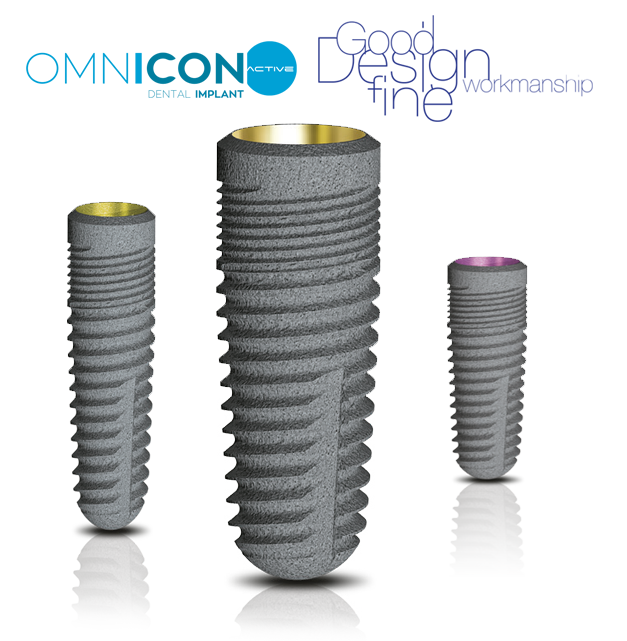
Omnicon İmplant, “Rh Pozitif Tıbbi Cihazları İmalat Teknoloji A.Ș” tarafından, ISO 13485 Standardı ve “MDD 93/42 EEC Tıbbi Cihazlar Direktifi” Kurallarına uygun olarak üretilmektedir.
Omnicon İmplantlar, en yeni teknoloji ürünü “Bilgisayarlı Numerik Kontrollü” makinalarda talașlı imalat metodu ile üretilmektedir. İmplantın, kemiğe delinmiș daha küçük çaplı delik içerisine ideal biçimde yerleștirilmesi ve yumușak kemik içerisinde daha geniș alana yerleșebilmesi için gövde üzerine İki Girișli Buttress tipi yiv açılarak ve bu yivlerin kendi yolunu kendisinin açabileceği karșılıklı iki adet keserek șekillendirici kanal açılmıștır.
Ayrıca, kemik seviyesine yakın Dört Girișli Mini yiv açılarak șekillendirilmiș ideal bir implant tasarımına sahiptir. Mini yivler Dört Girișli ve kemik seviyesinin 0.7mm altından düz devam eden uzunluktan sonra bașlar 1.6mm hatve ile 2.5mm așağıdaki konik bașlangıcına kadar devam eder. Mini yivler yarım yiv derinliğindedir.
:: Konik Gövde Formu
:: İki Girișli Buttress ve Dört Girișli Mini Yiv
:: Kendi Kendine Yivini Açan İki Kanal
:: RBM Yüzey İșlemi
:: Altı Köșeli İç Bağlantı
:: Renk Kodlu İç Yüzey
-
Detay
-
Teknik Özellikler
-
Paket İçeriği
-
Katalog
 1.5 Derecelik konik boyunca 1.6mm Hatveli İki Girișli Buttress tipi yiv açılmıstır ve konik yüzey ile Buttres yiv dibi arasında da 1.5 Derecelik ikinci bir açı vardır. 1.6mm Buttress yivler İmplant yerleștirilirken döndürme sayısını azaltır. Mini yivler ise kemik seviyesinde gerilimi azaltır.
Basınçlı Kumlama
İmplant yüzeyinin pürüzlendirilmesi HA/B-TCP
BIPHASIC CALCIUM PHOSPHATE (Hydroxyapatite>65% b-TCP, aTCP and TTCP phase <35% other Ca-P phases <5%)
malzemenin implant yüzeyine CNC otomasyon sistemiyle püskürtülerek gerçekleştirilir.
Asit İşlemi
Kumlama ișleminden sonra, özel karıșımlı asit ile implant yüzeyinin temizlenmesi ve yüzey pürüzlülüğünün belirginleștirilmesi için yapılan ișlemdir.
Yüzey Ölçümü
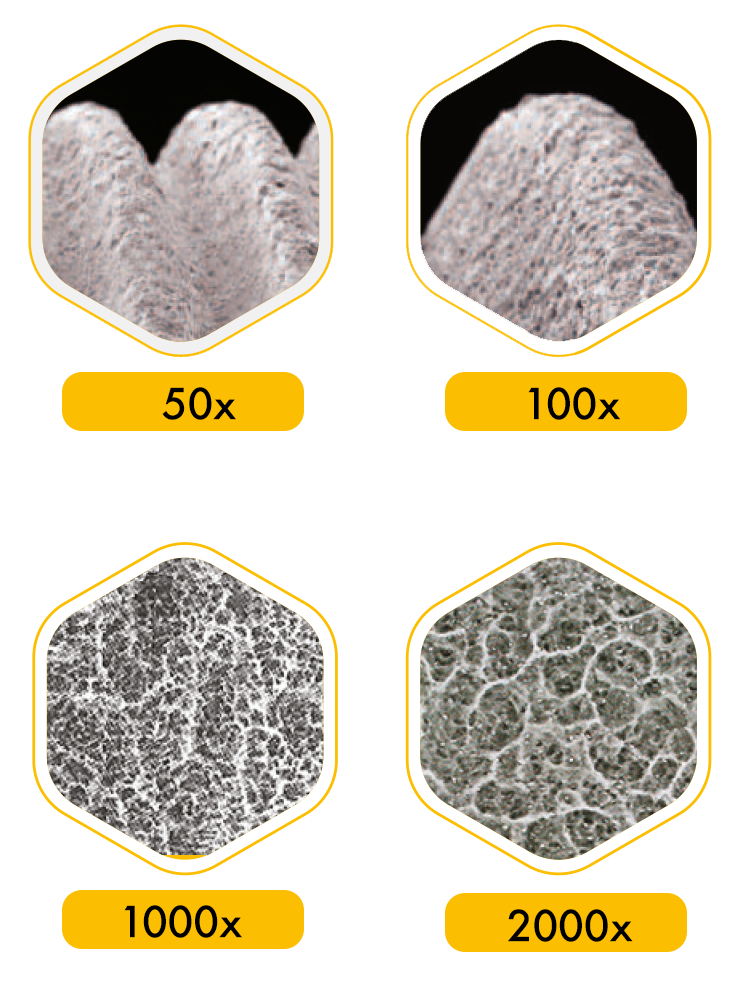
Pürüzlendirilen implant yüzeyinin asit ișlemi ile partikül kalıntılarından tamamen temizlenmesinden sonra pürüzlü yüzeyde 1,5-2,3 micron ortalama değerde Surtronic 3P ile ölçülmüştür.
Bu değerler Dental implantlar için kabul edilen değerlerdir.


Steril İmplant Paketi
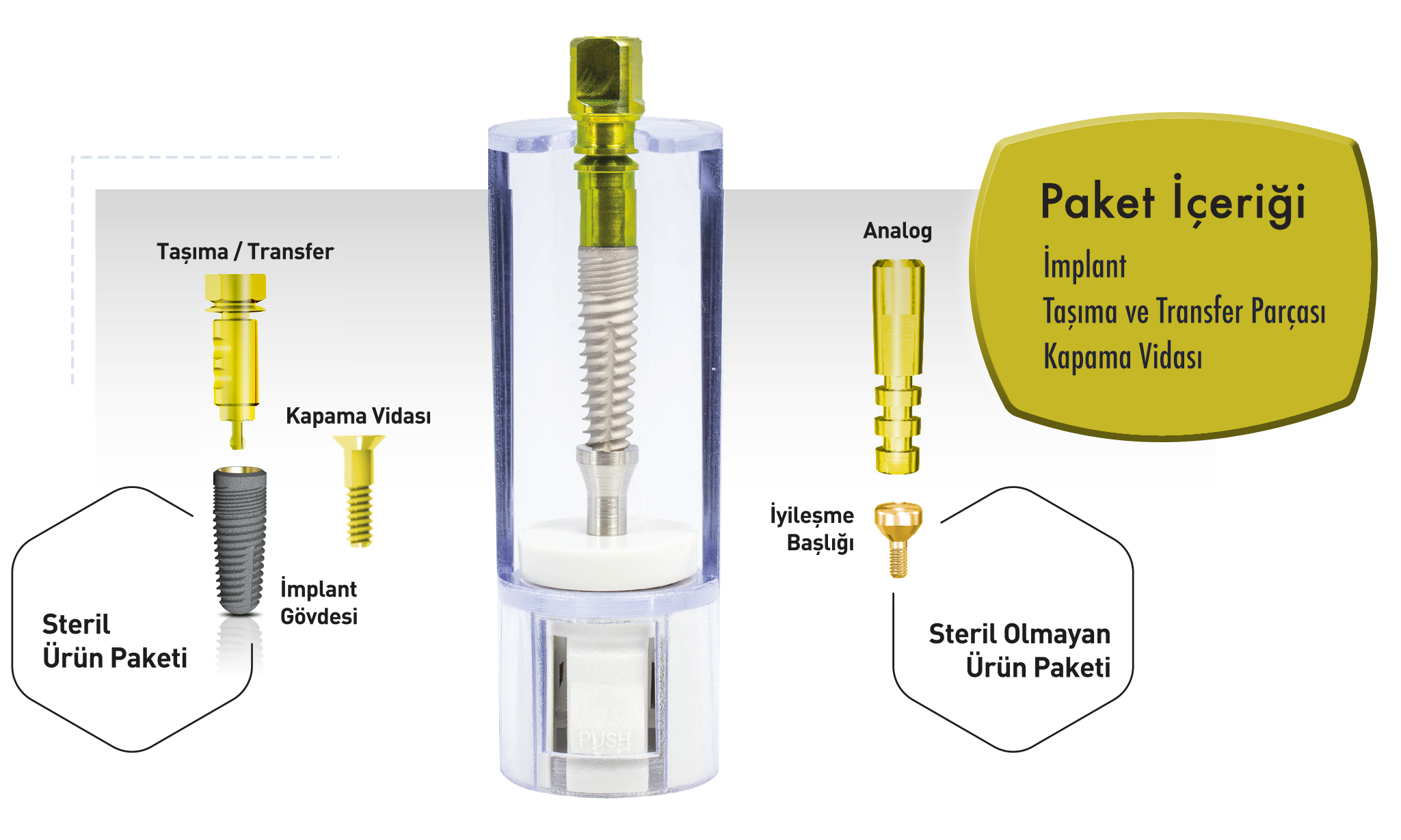
Titanyum taşıma parçası ile birlikte implant ve alt tarafına ayrı bir plastik parça ile kapama vidası yerleştirilmiş plastik iç parça, şeffaf plastik şişenin içine yerleştirilerek, güvenlik kilitli yarı şeffaf plastik kapak ile kapatılmış ve gama ışınıyla steril edilmiş olarak kullanıma sunulur.
Steril Olmayan İmplant Paketi
İmplant uygulama sonrasında hastaya kullanılacak parçaların tamamı steril olmayan ambalaj içerisinde servis edilir.